Life happens and size matters

Most days are quilting days but then there are days where life just interrupts my quilting harmony. This weekend has been one of those. It involved some seasonal yard work. Its gotten colder here and the weekends are numbered before it’s too cold for me.  I get a lot from quilting but I also need a break at times to refresh. Getting outdoors to garden helps feed the spirit. This kind of digging I would say was more the type one would need to drive out evil spirits. Lets just say the demons are now gone!

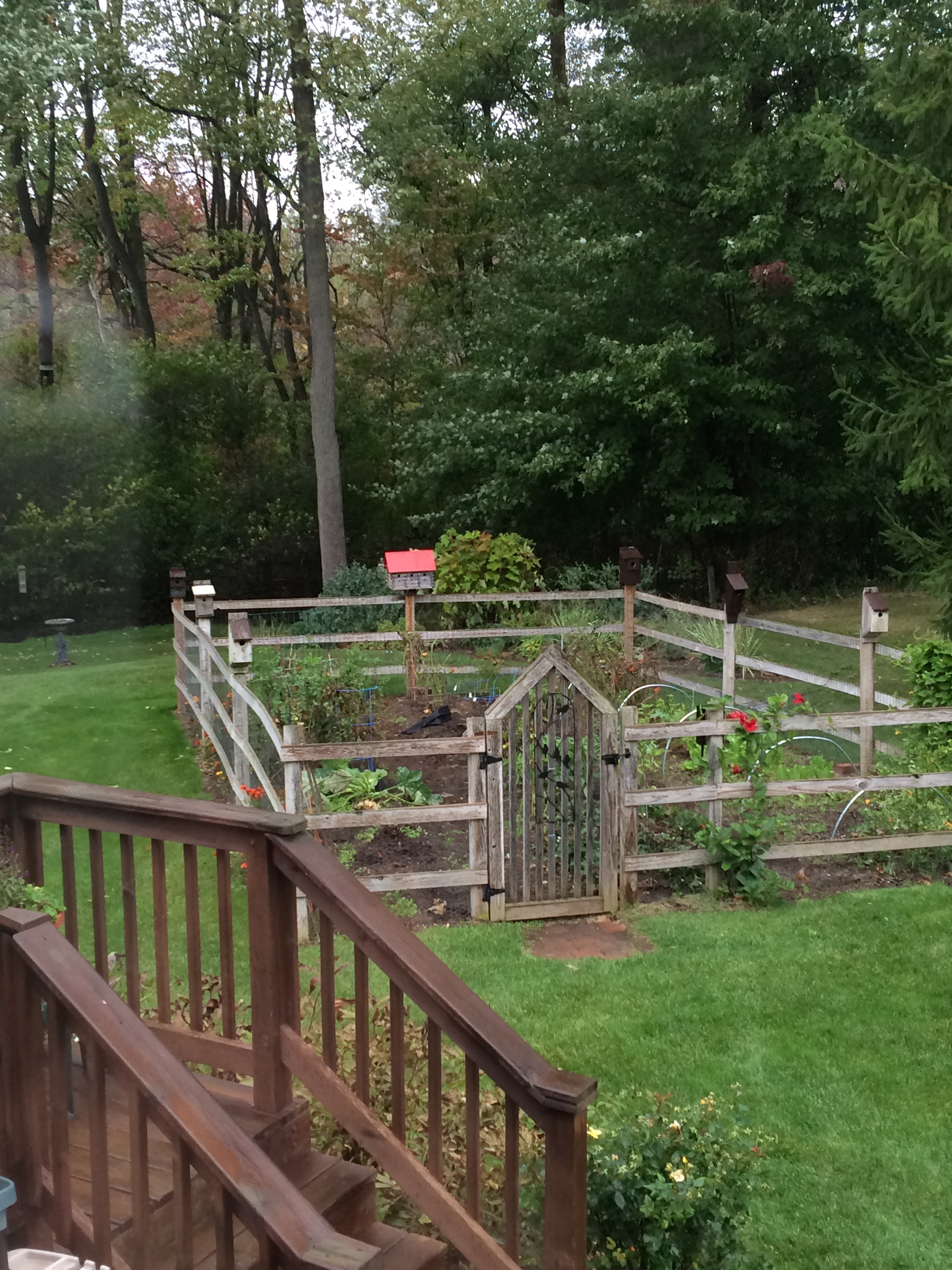
I am very happy that we got the large shrub out and moved to the back yard corner where it can grow to the size and shape it should be.  I’ve been fighting to keep it into a more compact smaller area. While it was beautiful, it would have to come out and trim back branches so people could get to my front door.  I have a much smaller variety to place in the front that wont get huge like this big guy and should be just as nice.

IMG_0313  IMG_0318

It can be like that with quilt piecing too. I’ve tried to fit a larger block into a space and it just won’t work until I cut it down to the size it should be. So much time and work can be saved if I just make sure to measure my blocks and make sure they are the correct size. Its easier to fix then than when I’m trying to fit all the blocks together. These are life lessons I have to remind myself and learn more than once.

Here is a new technique I was shown at AQS Grand Rapids in August. It is using a Felling Foot to put on a machine binding. The original use for this foot is french seams. To make a binding I cut a 2″ strip that will be folded in half and stitched with the raw edge to the outside edge of the quilt with the Felling foot & the machine needle all the way to the left. After its applied all the way around the quilt is turned & the folded edge is pulled over the lip on the inside of the foot. When stitched it aligns the binding so that the thread catches the edge on both sides of the binding. Here is a photo of my first try. Its a little bit narrow but was very accurate two step process. Here is a link to a tutorial I found that shows step by step how to do this. http://awomanaday.com/2013/01/17/happy-feet-quilt-binding-edition/  I believe you can find this foot for about any machine brand.

IMG_0319

Have a great day & sew on!


Low Cost Quilting?

I recently saw a post on FB advertising low cost quilting. Is it really less expensive? I think that depends on your price point, the density and quality of the quilting and if you must pay shipping fees. Looking further I wondered how I compared and was surprised to find that not only did I have more experience as a long-arm quilter, I also charged significantly lower prices. Not only that, but most of the quilters in my area charge less than many out of state businesses.

You may be able to get a really small placemat or table runner cheaper because they do not appear to charge a minimum fee but they do not take the time to meet with you to talk about how you would like your quilt quilted or to allow you to look over the quilt before you pay for it. The small items may also not be less expensive when you add shipping depending on size. The batting is included in their pricing but my calculations show that it would still be less expensive to pay for that separately. The bundling of the two just makes it a little harder to compare pricing to other quilters. I offer the same batting for the going rate which is determined by Hobbs costs with standard markup and I allow customers to bring their own batting of choice if they prefer something else.

I wonder if many of the quilts quilted might have had a better outcome with some input on design, thread color & batting? I find most of my customers would like help in that area. I’ve quilted hundreds of quilts & often have a pretty good idea of what designs work well. I can offer information about the batting before they decide to see what finished look they prefer.

I love some of the fun specials offered from mail order businesses but it pays to compare apples and apples. In my opinion, any local quilter would be happy to also let you choose the design, color thread & batting from a check list without spending any personal time. Using a limited checklist of colors & designs doesn’t necessarily make it less expensive for the shopper, it makes it less expensive for the long-arm quilter.   I can work the same way but I prefer to meet with customers and find out more about the quilt, lay out threads on the quilt, ask who it’s for and what kind of quilting they like. Do they like the design dense or open, do you want the thread to show up more or just give texture?

I have not even discussed supporting the local business community, quilting density or production quilting. I hope some of this information helps those that haven’t had any long-arm quilting done think more about some of the details regarding the finishing of their quilt. This is solely my opinion that while many of us that long-arm quilt do not tout lower costs, we try to keep it affordable and want to have happy returning customers. I love what I do and I want my customers to love their finished quilt as much as I do.

Scrappy Buzzsaw Quilt

Here is a fun way to use up excess 2.5″ strips of fabric. This quilt was made from leftover pieces of past quilts & quilt bindings. The block in this quilt is a buzzsaw and finishes at about 8.5″. I found a pattern for this on Quilter Cache:  http://www.quilterscache.com/B/BuzzsawBlock.html. The pattern uses paper piecing but I’m sure it would be pretty easy to just figure out if traditional piecing is preferred.  Jan did a great job using up excess fabrics while making a pretty quilt for her bed.

The quilting is called Turning Leaf by Apricot Moon. This density of design falls within my 1.5 cent PSI pricing. The thread is Glide grey to go with the backing fabric. She provided Warm & White batting.

IMG_2208  IMG_2209  IMG_2207

Nearly Perfect Quilt

This is probably the closest I’ve seen to a perfect quilt. While working on this quilt I had some time to think about what makes the piecework come together so nicely. I think the answer is taking special care to all of the details. Maybe it’s slowing down from the very beginning, the accurate cutting, checking seam allowance before continuing on with sewing more pieces. I think checking the block size and making sure the blocks all measure the same is important. Of course that cannot happen without great pressing. Then I ask myself what makes great pressing? For me its a hot iron, a little steam & checking to make sure the piece holds a press and measures what it should. The right side of the seam should lay open & flat. The back/wrong side of the seam should be pressed in the correct direction depending on the block you are making. With all this said I have not made a nearly perfect quilt yet but I keep trying. I’m fortunate to see so many other quilts & learn from the successes and failures.

Here are some pics of Connie M’s nearly perfect quilt. It was such a pleasure to quilt. The pattern is called Manassas by Jo Morton.

When on the quilt frame the quilt lays square and flat. The blocks lay horizontal and vertical to the frame. When looking at the back of the block you can see how well pressed the seams are. Even on the front the seams lay all the way open with no speed bumps.

IMG_2176 IMG_2179 IMG_2182

Here are the quilted pics. The quilting design is Damask by Ann Bright, the batting is Quilters Dream Select and the thread is a olive green. The backing is flannel.

IMG_2197 IMG_2198 IMG_2199

Insects & Fruit


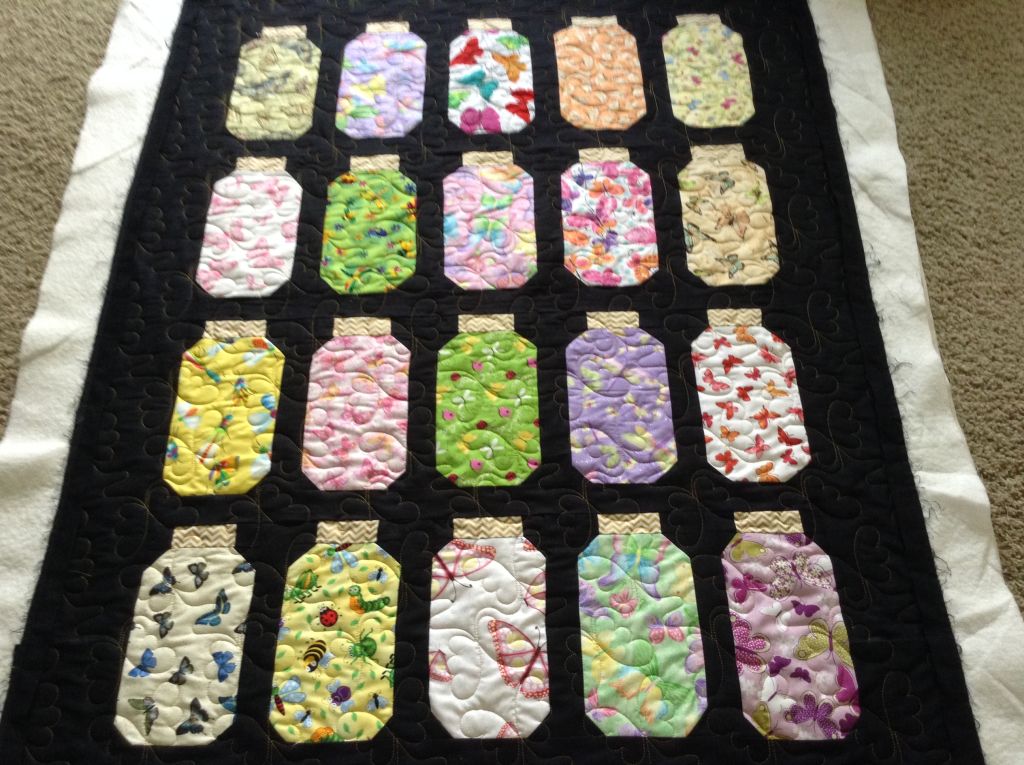
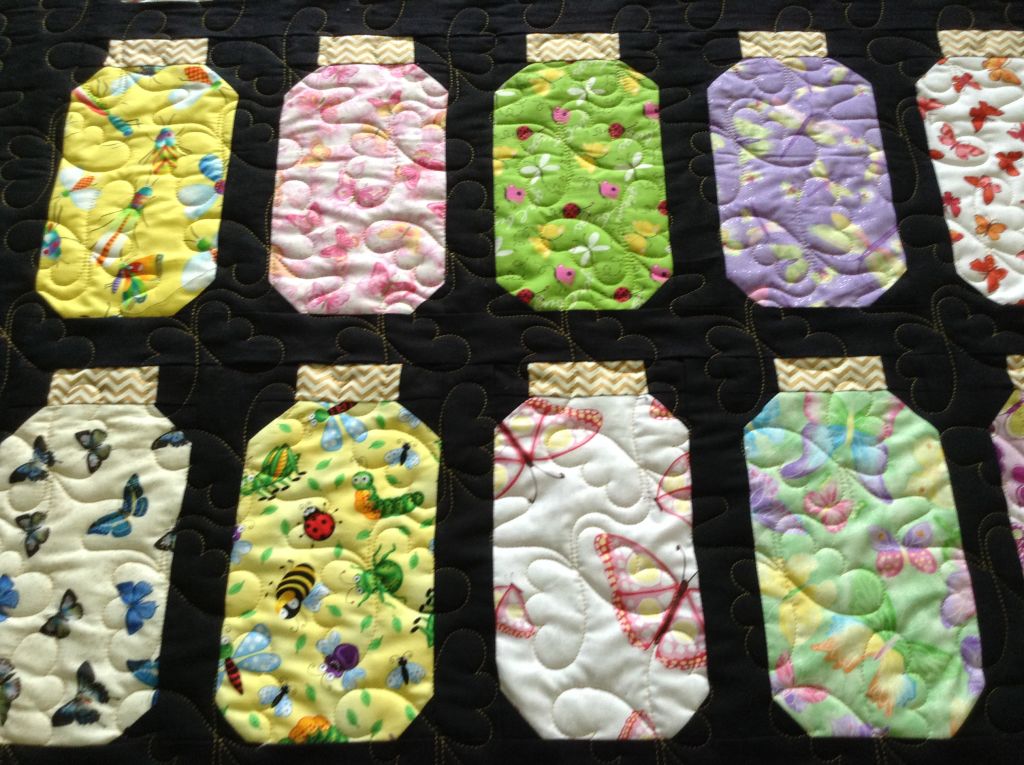
Peggy D’s Bugs in a jar quilt with Angel Wings design by Jodi Beamish. Thread is gold & batting warm & natural.

IMG_2169  IMG_2172  IMG_2173

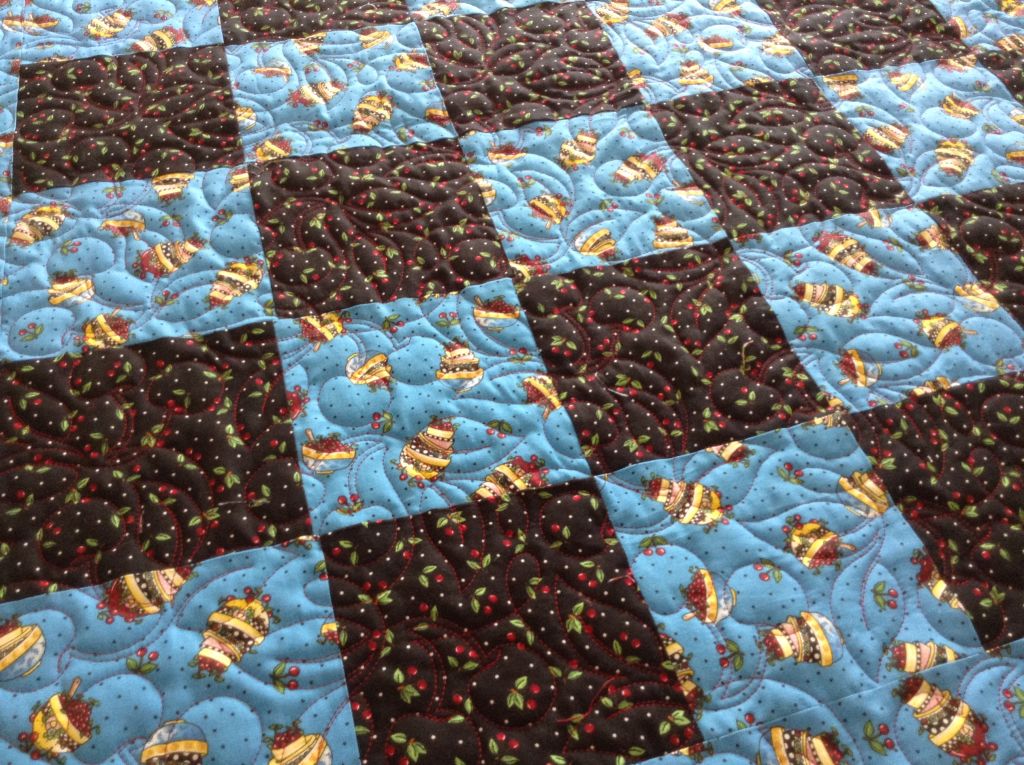
Penny B’s Cherry quilt, Cherries Jubilee quilt design by Patricia Ritter & Jessica Schick.   Red thread, hobbs 80/20 batting & Minky backing. IMG_2165  IMG_2168

German theme quilt

Judy P pieced this Bavarian quilt as a gift for a German singing group that has traveled to the US to perform. The quilt design is EZ Allover Feathers by Munich Designs. The thread is Isacord Blue Jean Gold and the batting is Warm & Natural. Lots of theme prints and nine patch make this a unique quilt.

IMG_2153  IMG_2151